


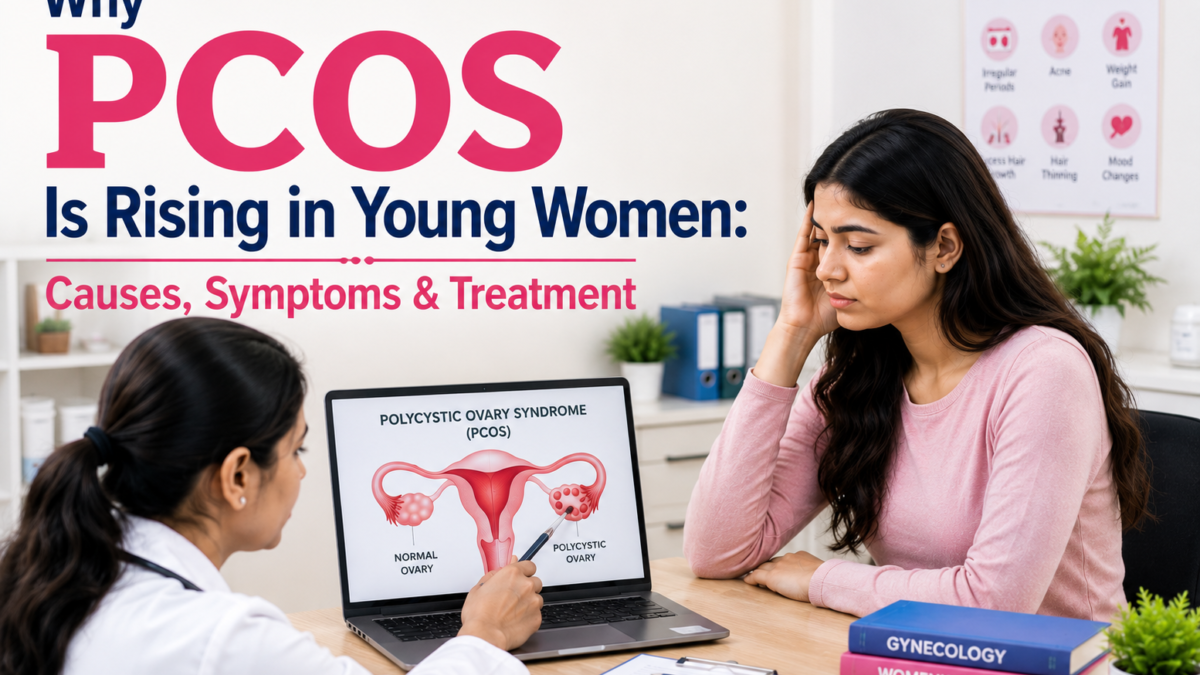
If you’ve noticed your periods becoming unpredictable, stubborn weight that won’t budge, or acne that just won’t clear, you’re not alone — and it may not be “just stress.” Polycystic Ovary Syndrome, or PCOS, has become one of the most common hormonal conditions among young women in India, and the numbers are climbing every year. The encouraging news is that PCOS is very manageable when it’s recognised early. In this guide, I’ll explain what PCOS is, why it’s rising among young women, the symptoms you shouldn’t brush aside, and how it can be treated so you can protect both your health and your fertility.
What is PCOS?
PCOS (Polycystic Ovary Syndrome) is a hormonal and metabolic disorder that affects women of reproductive age. In PCOS, the ovaries produce higher-than-normal levels of androgens (male hormones that women naturally have in small amounts). This hormonal imbalance disrupts regular ovulation, which is why periods become irregular, and it can cause several small follicles to develop on the ovaries — what you may have heard called “cysts.” It’s a common condition: studies suggest roughly one in five Indian women is affected, yet a large number remain undiagnosed for years.
PCOS vs PCOD: what’s the difference?
This is one of the most common questions I hear, because the two terms are often used interchangeably in India — but they aren’t quite the same. In PCOD (Polycystic Ovarian Disease), the ovaries release immature or partially mature eggs that build up as small cysts; it’s generally milder and often responds well to lifestyle changes. PCOS is a more significant endocrine disorder, usually involving higher androgen levels and a greater impact on metabolism, fertility and long-term health. Medically, PCOS is the recognised diagnosis, but the key point is simple: both deserve attention, and both can be managed.
Why is PCOS rising in young women?
The sharp rise isn’t down to one single cause — it’s a combination of modern lifestyle and better awareness. The biggest drivers I see in my clinic are:
- Sedentary routines — long hours at desks and screens, with little physical activity
- Diets high in refined carbohydrates, sugar and processed foods, which worsen insulin resistance
- Chronic stress and poor sleep, both of which disturb hormone balance
- Rising rates of overweight and obesity, closely linked to insulin resistance
- Greater awareness and earlier diagnosis — more young women are now getting tested, so more cases are being identified
Part of the increase is genuinely concerning, but part of it reflects something positive: women are talking about their cycles and seeking help sooner.
Early symptoms of PCOS you shouldn’t ignore
PCOS often whispers before it shouts, and many early signs get dismissed as “normal.” Watch for:
- Irregular, delayed, or missed periods — often the very first clue
- Unexplained weight gain, particularly around the abdomen
- Persistent acne, especially along the jawline, that doesn’t respond to usual treatments
- Excess facial or body hair (hirsutism) and, sometimes, thinning of scalp hair
- Oily skin or dark, velvety skin patches around the neck or underarms
- Mood changes, fatigue, or difficulty sleeping
- Trouble conceiving, which is sometimes how PCOS is first discovered
If several of these sound familiar, it’s worth a conversation with your gynaecologist rather than waiting and hoping they pass.
What causes PCOS?
The exact cause isn’t fully understood, but two factors play a central role. The first is insulin resistance — when the body’s cells don’t respond well to insulin, the body produces more of it, which in turn pushes the ovaries to make more androgens. The second is a genetic tendency; PCOS often runs in families. Lifestyle factors like diet, inactivity and stress don’t create PCOS on their own, but they can trigger or significantly worsen it in women who are already predisposed.
Why early diagnosis matters
PCOS is more than irregular periods — left unmanaged, it raises the long-term risk of type 2 diabetes, high cholesterol and heart disease, infertility, and, because of irregular ovulation, changes in the uterine lining that can affect endometrial health. It’s also strongly linked to anxiety and low mood. This is exactly why I encourage young women not to normalise their symptoms. Catching PCOS early means we can protect your future fertility and metabolic health, not just settle today’s symptoms.
How is PCOS diagnosed?
There’s no single test for PCOS. As your gynaecologist, I make the diagnosis by looking at the whole picture: your menstrual history and symptoms, a blood test to check hormone and (often) insulin and thyroid levels, and a pelvic ultrasound to look at the ovaries and uterine lining. Internationally, doctors use a framework (the Rotterdam criteria) that requires at least two of three features — irregular ovulation, signs of excess androgens, and polycystic ovaries on ultrasound. The aim is to confirm PCOS and rule out other conditions that can mimic it.
PCOS treatment and management
PCOS can’t be “cured,” but it can be controlled very effectively, and treatment is always tailored to your goals — whether that’s regular cycles, clearer skin, or planning a pregnancy.
Lifestyle comes first. A balanced diet that limits refined carbohydrates and sugar, regular physical activity, good sleep, and stress management form the foundation. Even a modest amount of weight loss — often around 5% of body weight — can noticeably improve symptoms and help restore ovulation.
Medications are added when needed. Combined hormonal pills can regulate periods and reduce acne and excess hair; metformin helps when insulin resistance is significant; and anti-androgen medicines can address hirsutism and stubborn acne. For women trying to conceive, ovulation-inducing treatment is highly effective, and assisted options like IVF are available if required.
Emotional wellbeing matters too. Living with PCOS can feel disheartening, and supporting your mental health is a genuine part of good care.
Can you get pregnant with PCOS?
Yes — and I want to reassure you here, because this worry weighs heavily on many of my patients. PCOS is one of the most common and treatable causes of difficulty conceiving. With the right combination of lifestyle changes, ovulation support, and timely guidance, a great many women with PCOS go on to have healthy pregnancies.
When should you see a gynaecologist?
Please don’t wait for things to “sort themselves out.” If your periods are irregular, you’re noticing acne or unwanted hair changes, you’re struggling with weight, or you’re finding it hard to conceive, an evaluation is worthwhile. PCOS is far easier to manage the earlier it’s caught.
At Saanvi Clinic in Wanowrie and Cloudnine Hospital, Kalyani Nagar, I help young women across Pune diagnose and manage PCOS with personalised, judgement-free care — from lifestyle and hormone management to fertility support.
📞 Book your consultation: +91 74980 49963 · Saanvi Clinic, Wanowrie, Pune
Frequently Asked Questions
- Is PCOS curable?
PCOS cannot be permanently cured, but it can be very well managed. With lifestyle changes and the right treatment, most women control their symptoms and protect their long-term health. - What is the difference between PCOS and PCOD?
PCOD is generally a milder condition that often improves with lifestyle changes, while PCOS is a more significant hormonal disorder with greater effects on metabolism and fertility. Your doctor can confirm which you have. - Can I get pregnant if I have PCOS?
Yes. PCOS is a common and treatable cause of fertility difficulty. Many women conceive naturally or with ovulation-supporting treatment. - What foods should I avoid with PCOS?
It helps to limit refined carbohydrates, sugary foods, and heavily processed items, and to focus on a balanced diet. Your doctor or a dietitian can guide a plan suited to you. - Does PCOS cause weight gain?
PCOS is linked to insulin resistance, which can make weight gain easier and weight loss harder, often around the abdomen. Managing it can be challenging but is very achievable with support. - At what age does PCOS usually start?
PCOS commonly appears in the teens and twenties, often around the time periods begin or in early reproductive years. - Is PCOS dangerous if left untreated?
Untreated PCOS raises the long-term risk of type 2 diabetes, heart disease, infertility, and changes to the uterine lining, which is why early management matters. - How is PCOS diagnosed?
Through a combination of your symptoms and menstrual history, blood tests for hormone levels, and a pelvic ultrasound of the ovaries.