

Service List
Contact With us for any advice
More Services
A hysterectomy is a significant decision, and understanding your options is essential before moving forward with the procedure. Dr. Vaishali Chavan provides personalised evaluation and hysterectomy surgery in Pune, guiding women through the entire process — from diagnosis to recovery — with clarity and care.
Whether you require a total hysterectomy, an abdominal hysterectomy or a minimally invasive approach, the right treatment plan depends on your individual health condition, symptoms and future needs.
Understanding Hysterectomy Surgery
A hysterectomy is a surgical procedure to remove the uterus and is generally recommended when other treatment options have not adequately addressed a woman's gynaecological condition. A hysterectomy operation may be advised for conditions such as fibroids, abnormal bleeding, chronic pelvic pain, endometriosis or certain gynaecological cancers.
There are different types of hysterectomy surgery, and the appropriate approach depends on the underlying condition, the extent of the disease and the patient's overall health:
- Total hysterectomy – removal of the uterus along with the cervix
- Partial (subtotal) hysterectomy – removal of the uterus while the cervix is preserved
- Abdominal hysterectomy – performed through an incision in the abdomen, generally used for larger uteri or more complex cases
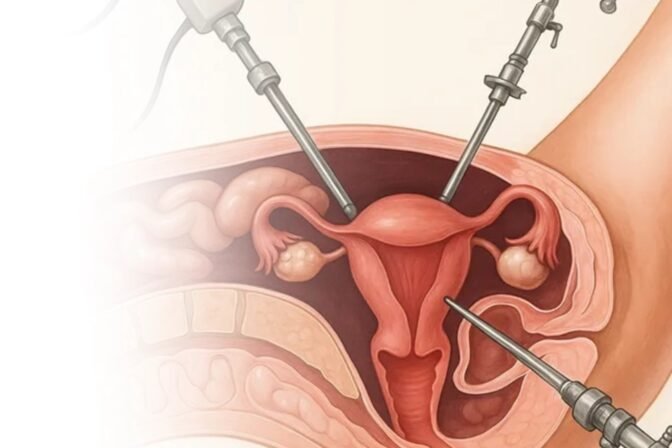
- Laparoscopic or minimally invasive hysterectomy – performed through small incisions, often associated with faster recovery
Not every case requires the same approach. A proper clinical evaluation helps determine which type of hysterectomy operation is most suitable for each woman.
Common Reasons for Hysterectomy Surgery
A hysterectomy operation may be considered when other treatments have not been effective. Common reasons include:
- Uterine fibroids causing pain or heavy bleeding
- Abnormal or prolonged uterine bleeding
- Chronic pelvic pain
- Endometriosis or adenomyosis
- Uterine prolapse
- Certain gynaecological cancers or precancerous conditions
Having one of these conditions does not automatically mean surgery is required. A gynaecological evaluation helps determine whether a hysterectomy is the appropriate course of treatment.

Dr. Vaishali Chavan
Dr. Vaishali Chavan provides personalised women's healthcare with a focus on clear communication, individualised treatment and comprehensive care at every stage of a woman's health journey, backed by 20+ years of experience.
When Should You Consult a Gynaecologist About Hysterectomy?
Consider consulting a gynaecologist if you experience persistent symptoms that have not responded to other treatments.
- You have heavy or prolonged bleeding that affects daily life
- You experience chronic pelvic pain
- You have been diagnosed with large or symptomatic fibroids
- You have uterine prolapse affecting comfort or function
- Previous treatments have not resolved your symptoms
- Your doctor has recommended surgical evaluation

How the Need for Hysterectomy is Evaluated
There is no single approach suitable for every woman. Evaluation generally involves understanding your symptoms, medical history and overall health before recommending surgery.
Medical and gynaecological history
Understanding your symptoms, previous treatments and reproductive goals.
Clinical examination
Assessment based on symptoms and physical findings.
Imaging and diagnostic tests
Ultrasound or other imaging may be recommended to assess the uterus and surrounding structures.
Discussion of treatment options
Reviewing whether non-surgical treatments have been tried and whether a hysterectomy operation is the appropriate next step.
Types of Hysterectomy Surgery Offered in Pune
Hysterectomy surgery can be performed through different surgical approaches depending on the patient’s condition, uterus size and overall health.
Total Hysterectomy
Removal of the uterus and cervix, generally recommended for specific gynaecological conditions where preserving the cervix is not advised.
Abdominal Hysterectomy
Performed through an abdominal incision, often suitable for larger uteri, extensive fibroids or more complex surgical cases requiring greater access.
Laparoscopic Hysterectomy
A minimally invasive option performed through small incisions, which may offer a shorter hospital stay and faster recovery for suitable candidates.
Vaginal Hysterectomy
Performed through the vaginal canal without external incisions, when clinically appropriate for the patient's condition.
Recovery and Care After Hysterectomy
Care after hysterectomy plays an important role in ensuring a smooth recovery. Recovery time varies depending on the type of surgery performed:
- Hospital stay typically ranges from a few days for abdominal procedures to a shorter stay for minimally invasive approaches
- Gradual return to normal activity is generally advised over several weeks
- Pain management and wound care are monitored closely in the initial recovery period
- Follow-up visits help track healing and address any concerns
- Guidance on physical activity, lifting restrictions and resuming daily routines is provided based on the type of surgery
- Emotional support and counselling may also be part of comprehensive care after hysterectomy, as adjusting to the procedure can be a personal experience for many women
Video: Hysterectomy Surgery in Pune Explained by Dr. Vaishali Chavan
Why Choose Dr. Vaishali Chavan for Hysterectomy Surgery in Pune?
Hysterectomy surgery requires both surgical expertise and sensitive patient communication. Dr. Vaishali Chavan provides gynaecological surgical care with experience in managing fibroids, abnormal bleeding, prolapse and other conditions that may require a hysterectomy operation, along with structured after care after hysterectomy to support recovery.
Frequently Asked Questions About Hysterectomy Surgery
1. What is a hysterectomy and when is it recommended?
A hysterectomy is a surgical procedure to remove the uterus, generally recommended when conditions such as fibroids, abnormal bleeding, chronic pelvic pain or certain gynaecological cancers have not responded adequately to other treatments.
2.What is the difference between a total and partial hysterectomy?
A total hysterectomy involves removal of both the uterus and the cervix, while a partial (subtotal) hysterectomy removes only the uterus, leaving the cervix in place. The suitable option depends on the underlying condition and is decided after clinical evaluation.
3. Is abdominal hysterectomy a major surgery?
Yes, an abdominal hysterectomy is considered major surgery as it involves an incision in the abdomen and is typically used for larger uteri or more complex cases. It generally requires a longer hospital stay and recovery period compared to minimally invasive approaches.
4.How long does recovery take after a hysterectomy operation?
Recovery time varies depending on the type of surgery performed. Abdominal hysterectomy may require several weeks of recovery, while laparoscopic or vaginal approaches often allow for a comparatively quicker return to normal activity. Your doctor will guide you based on your specific procedure.
5. Will I experience menopause after a hysterectomy?
A hysterectomy removes the uterus, so menstrual periods stop, but menopause only occurs if the ovaries are also removed. If the ovaries are preserved, they continue to function and natural menopause occurs at its usual expected time.
6. What care is needed after hysterectomy at home?
Care after hysterectomy at home generally includes adequate rest, gradual return to activity, proper wound care, avoiding heavy lifting for the advised period, and attending follow-up visits so your doctor can monitor healing and address any concerns.
7. Can a hysterectomy be performed laparoscopically?
Yes, in many suitable cases a hysterectomy can be performed laparoscopically through small incisions. This minimally invasive approach may offer benefits such as a shorter hospital stay and faster recovery, depending on the individual case.
8. Are there any risks associated with hysterectomy surgery?
As with any major surgery, a hysterectomy operation carries some risks, such as infection, bleeding or reaction to anaesthesia. Your doctor will discuss the specific risks relevant to your case and the precautions taken to minimise them.
9.Will a hysterectomy affect my hormone levels?
If only the uterus is removed and the ovaries are preserved, hormone levels are generally not significantly affected, as the ovaries continue producing hormones. However, if the ovaries are also removed, it can lead to hormonal changes and early menopause symptoms.
10. When can I resume normal activities after hysterectomy surgery?
Most women are advised to gradually resume light activities over a few weeks, with a full return to normal routines, including exercise and lifting, generally recommended after your doctor confirms adequate healing at follow-up visits.
Dr. Vaishali Chavan's Clinic
Visit our clinic for personalised women's healthcare and gynaecological consultation.
Clinic Location
Dr. Vaishali Chavan's Saanvi Clinic
106 Picasso Landmark,
Opposite Kedari Petrol Pump,
Near Oxford Village, Wanowrie,
Pune – 411040